
A story of renewable origins, resilient supply, global reach, and continuous innovation, and of how over five decades of carbon expertise are preparing Haycarb for what comes next.
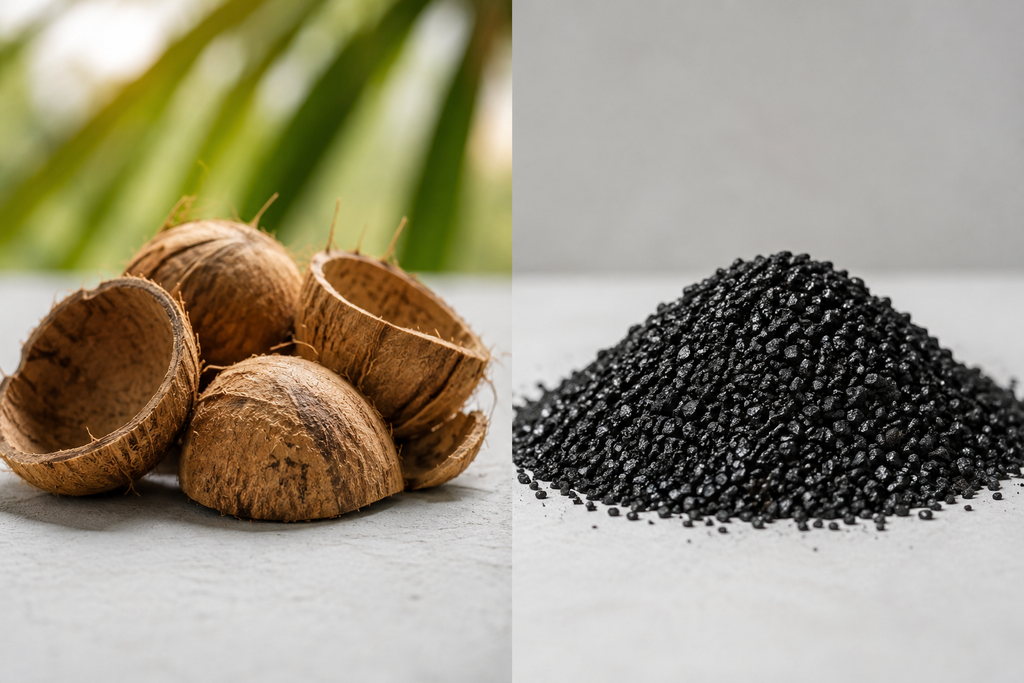
A coconut shell rarely looks like the beginning of a global technology story.
Across the tropical world, it begins as part of an agricultural crop supporting food, livelihoods, and local economies. Once the coconut has served its primary purpose, the shell can easily be seen as what remains: an agricultural by-product of limited value.
More than five decades ago, Haycarb learned to see something different.
We saw a renewable source of carbon. We saw an opportunity to create livelihoods around its collection and transformation. And over time, we learned how to engineer its naturally rich carbon structure for increasingly demanding applications.
Today, that path can lead a coconut shell into a drinking-water filter, a sophisticated clean-air system, a gold mine on another continent, a supercapacitor built for high performance, or even the porous architecture of a next-generation Silicon–Carbon battery material.
Yet the ability to make advanced carbon is only one part of the promise.
For customers operating critical processes around the world, innovation matters only when it can also be delivered consistently, responsibly, reliably and at scale.
That is the story behind Built to Deliver.
Building resilience beyond manufacturing
Activated carbon manufacturing begins long before a kiln is fired.
Coconut shells and coconut-shell charcoal account for more than 70% of Haycarb’ s raw material needs. Building a resilient carbon business has meant understanding manufacturing as well as the agricultural, environmental, and human ecosystem behind the carbon itself.
Over decades, Haycarb has developed a sourcing model spanning multiple countries, supported by different approaches to sustainable charcoal production.
In Sri Lanka, Haritha Angara has helped suppliers move from traditional open-pit charcoaling towards more controlled closed-pit methods that improve combustion efficiency, reduce uncontrolled smoke, and produce more consistent coconut-shell charcoal.
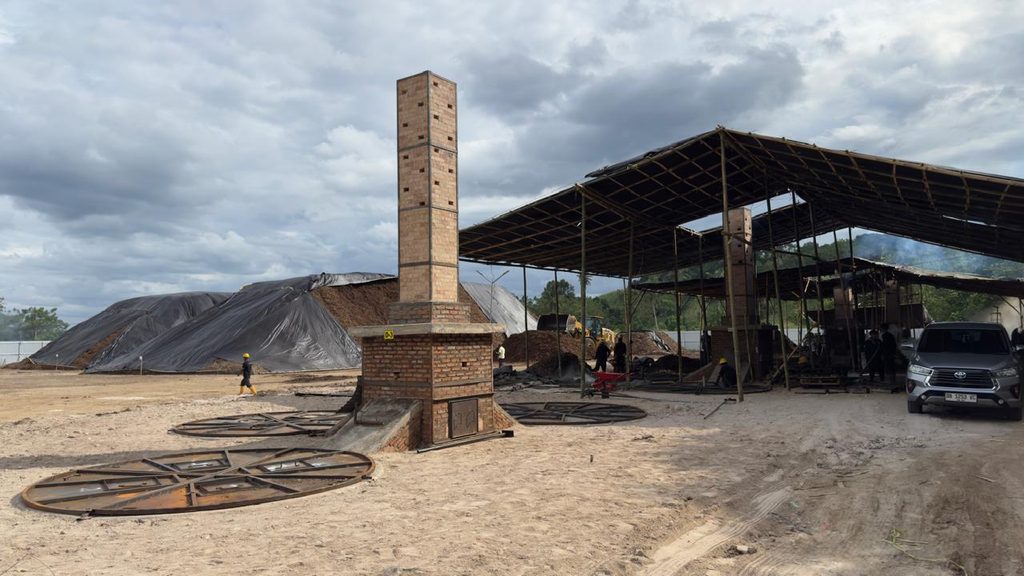
The model has evolved further through Recogen, where heat generated from closed-system charcoaling is recovered to generate renewable electricity. Thailand has developed backward-integrated vertical-kiln charcoaling, while Indonesia has strengthened supply security through new green-charcoaling operations in Surabaya in east Java, and North Sulawesi.
These are not isolated ESG projects. Together, they form a more tightly integrated raw material strategy, designed to improve environmental performance, charcoal consistency, and supply resilience at the same time.
That resilience is strengthened further by geography.
Haycarb’ s sourcing network now spans major coconut-producing regions including Sri Lanka, Indonesia, Thailand, the Philippines, India, and Vietnam. This diversified footprint has historically helped the Group manage volatility in coconut harvests and shell availability across markets.
The philosophy is simple:
Global by Reach. Local by Source.
Performance without compromise
Sustainability alone does not win specifications. Performance does. Coconut shell’s natural microstructure delivers a dense, mechanically robust carbon framework with exceptional intrinsic microporosity.
For supercapacitor electrodes, Haycarb’ s HCE 200 series carbon delivers a lower equivalent series resistance and high specific capacitance, supporting the rapid charge-discharge cycles demanded by grid balancing and backup power. Engineered composite anodes, the HCE 400 series porous carbon provide the engineered pore architecture needed for silane CVD infiltration, enabling higher energy density and faster charging the lithium-ion industry needs.
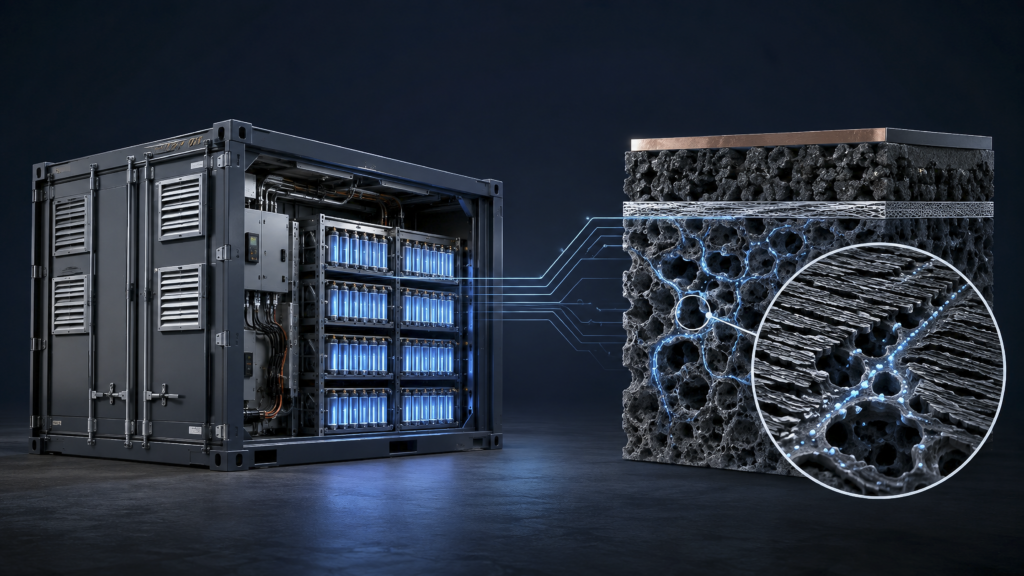
For Haycarb, part of the answer has been growing on trees all along.
The number behind the claim
Sustainability claims carry greater weight when they are backed by measurement. Haycarb commissioned an independent life cycle carbon footprint assessment of its Energy Storage Carbon specialty range (HCE Series), conducted by the National Cleaner Production Centre, Sri Lanka in accordance with ISO 14040:2006 and ISO 14044:2006, modelled in SimaPro 9.6 against the ecoinvent 3.10 database using the IPCC 2021 GWP 100a method.
The result is 1.47 kg CO₂-eq per kilogram of HCE Series carbon on a cradle-to-gate basis, covering relevant raw material and consumable inputs, transportation, manufacturing, wastewater treatment, and packaging. Upstream impacts associated with the origin of waste coconut shells were excluded using the cut-off approach. A 1,000-run Monte Carlo uncertainty analysis produced a 95% Monte Carlo uncertainty interval of 1.36–1.60 kg CO₂-eq/kg, corresponding to the 2.5th and 97.5th percentiles of the simulated results, with a coefficient of variation of approximately 4.1%.
Two findings deserve particular attention.
First, the charcoaling and activation stages contribute effectively zero fossil global warming impact under the assessment methodology. Under the IPCC 2021 method, biogenic carbon released during pyrolysis and activation is treated as part of a short atmospheric cycle rather than a net addition. This is a defining advantage of a bio-based precursor. Combined with renewable-powered operations, this means the thermal conversion stages, typically the most energy-intensive in carbon manufacture, register no measurable fossil contribution under the assessment methodology.
Second, the remaining footprint is concentrated in areas where improvements can be explored to further lower the carbon footprint: acid washing chemistry accounts for roughly 43%, LPG used in drying around 15%, and packaging materials a further 13%.
From baseline to reduction
A footprint figure is only useful if it drives action. It has.
During FY2025/26, Haycarb converted a selected dryer from LPG operation to run on recovered waste heat, reducing LPG consumption by approximately 11,000 kg per month and saving an estimated 5,400 GJ of energy annually. This targets the drying stage the LCA identified as the second-largest contributor to the HCE footprint and provides a model for phased expansion where technically feasible.
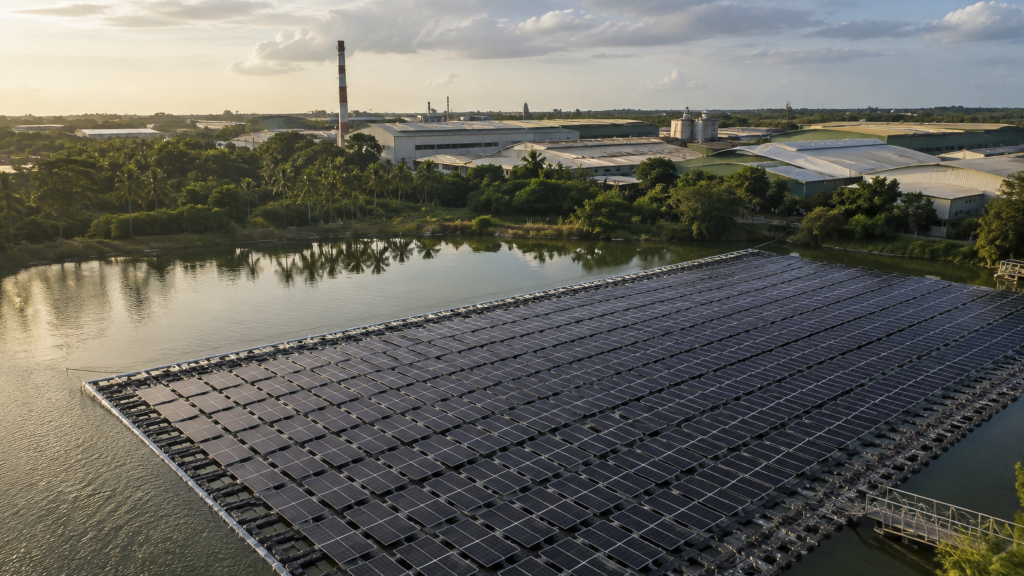
Renewable generation continued to expand across the Group. Rooftop solar installations in Sri Lanka, together with floating and rooftop solar systems in Thailand, contributed 11,347.7 GJ of solar electricity during FY2025/26. This included a 1.09 MW floating solar installation at Carbokarn, which supplies approximately 12% of the manufacturing facility’s electricity requirements. Overall, renewable sources, led by waste heat utilisation and solar power, met 77% of Haycarb’ s energy requirements during the year. The journey is not yet complete. Under its ACTIVATE ESG Roadmap 2030, Haycarb’ s energy intensity and Scope 1 and 2 reduction targets are currently tracking behind plan, in part because value-added carbon processing is inherently more energy-intensive than commodity grades and in Haycarb faster climb to higher value addition is central to its business strategy and long-term economic sustainability. The company reports this progress transparently. The 1.47 figure is a baseline, not a ceiling, and not yet a destination.
A green supply chain, built over two decades
What differentiates Haycarb’ s sustainability story is that it does not begin at the factory gate. It begins in the villages and smallholdings where coconut shells are collected and converted to charcoal.
Traditional open-pit charcoaling releases significant methane and particulate emissions. In 2003, Haycarb’ s subsidiary Recogen (Pvt) Ltd. developed and patented a green charcoaling technology that captures pyrolysis energy and converts it to electricity. The project was accredited for carbon credits under the UN Kyoto Protocol for three consecutive years from 2011 to 2013. Renewing our commitment to this combined cycle model, in 2026 Haycarb invested close to USD 2 million in a comprehensive overhaul of the facility, including new Boiler systems and steam turbines.
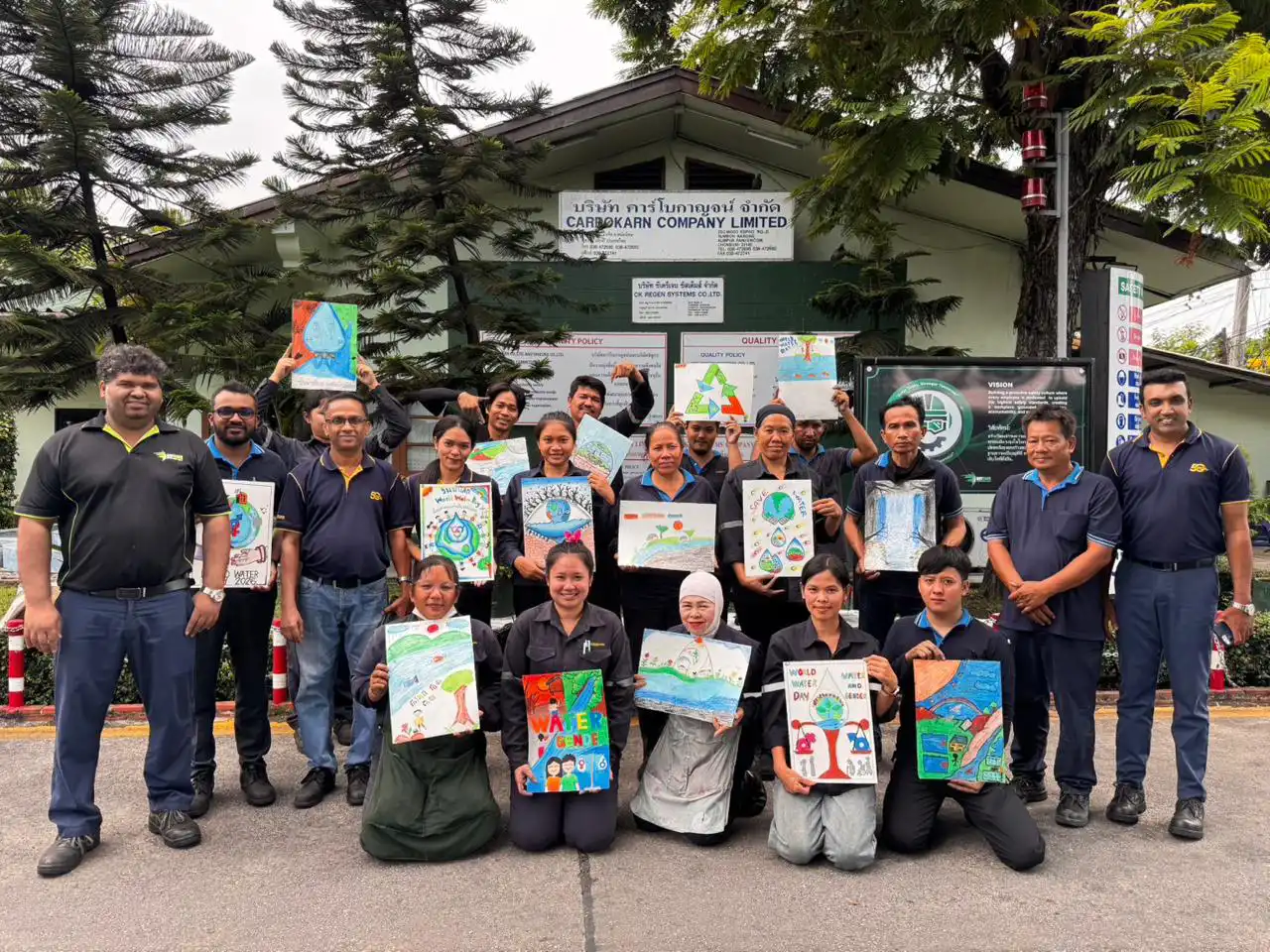
This focus on more responsible charcoaling also extends across Haycarb’ s supply chain. Through our Haritha Angara (“Green Charcoal”) program, Haycarb provides technical know-how and financing to small and medium-scale charcoal suppliers transitioning from traditional pits to more environmentally responsible charcoaling methods. Recognized as Asia’s leading Green Leadership Project at the Asia Responsible Entrepreneurship Awards in 2017, the program supports over 500 coconut shell and charcoal suppliers across our manufacturing geographies. More than 60% of Haycarb’ s charcoal intake now comprises green charcoal. This includes approximately 30% of Thailand’s charcoal requirement, supported by the utilisation of backward-integrated vertical kiln capacity, and 25% of Indonesia’s charcoal requirement, where green charcoal usage expanded across operations during the year. This progress was further supported by investment in green charcoaling sites in Surabaya and Manado, Indonesia.
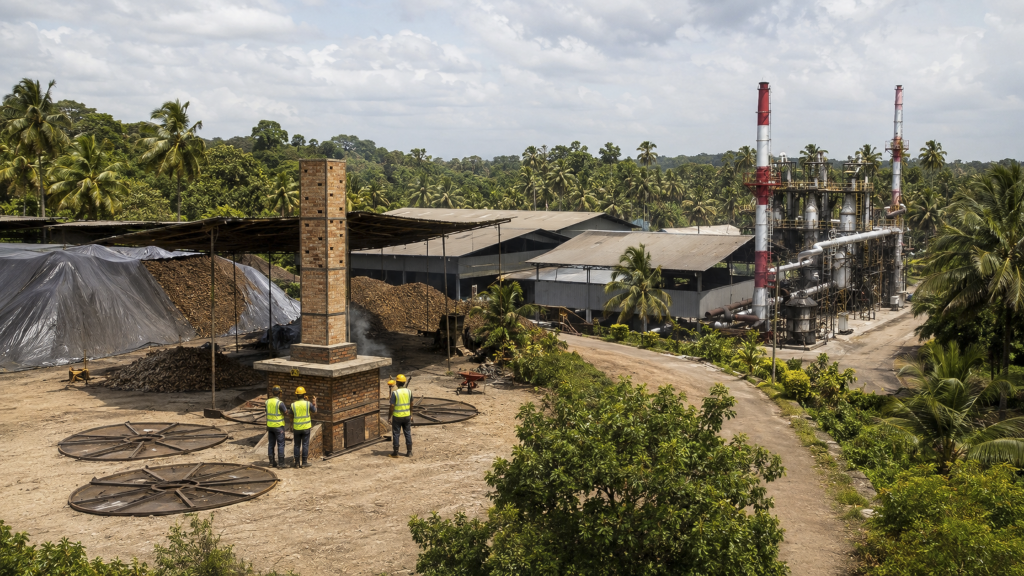
The commitment extends further upstream still. Having completed a 100,000-tree coconut cultivation program in Sri Lanka’s Northern Province, Haycarb launched a second 100,000-tree commitment in the Eastern Province, distributing 35,786 seedlings to 784 farmers across approximately 558 acres in Ampara and Batticaloa during FY2025/26. This strengthens farmer livelihoods and the long-term resilience of a renewable raw material base.
Measured, assured and independently rated
Haycarb maintains ISO 14001, ISO 9001, ISO 45001, and ISO 14064:2018 certification for greenhouse gas management, holds an Eco Vadis Silver rating placing the Company in the top 15% of assessed businesses, and is a signatory to the UN Global Compact. Haycarb’ s SLFRS S1 and S2 climate disclosures have been independently assured.
The circular carbon advantage
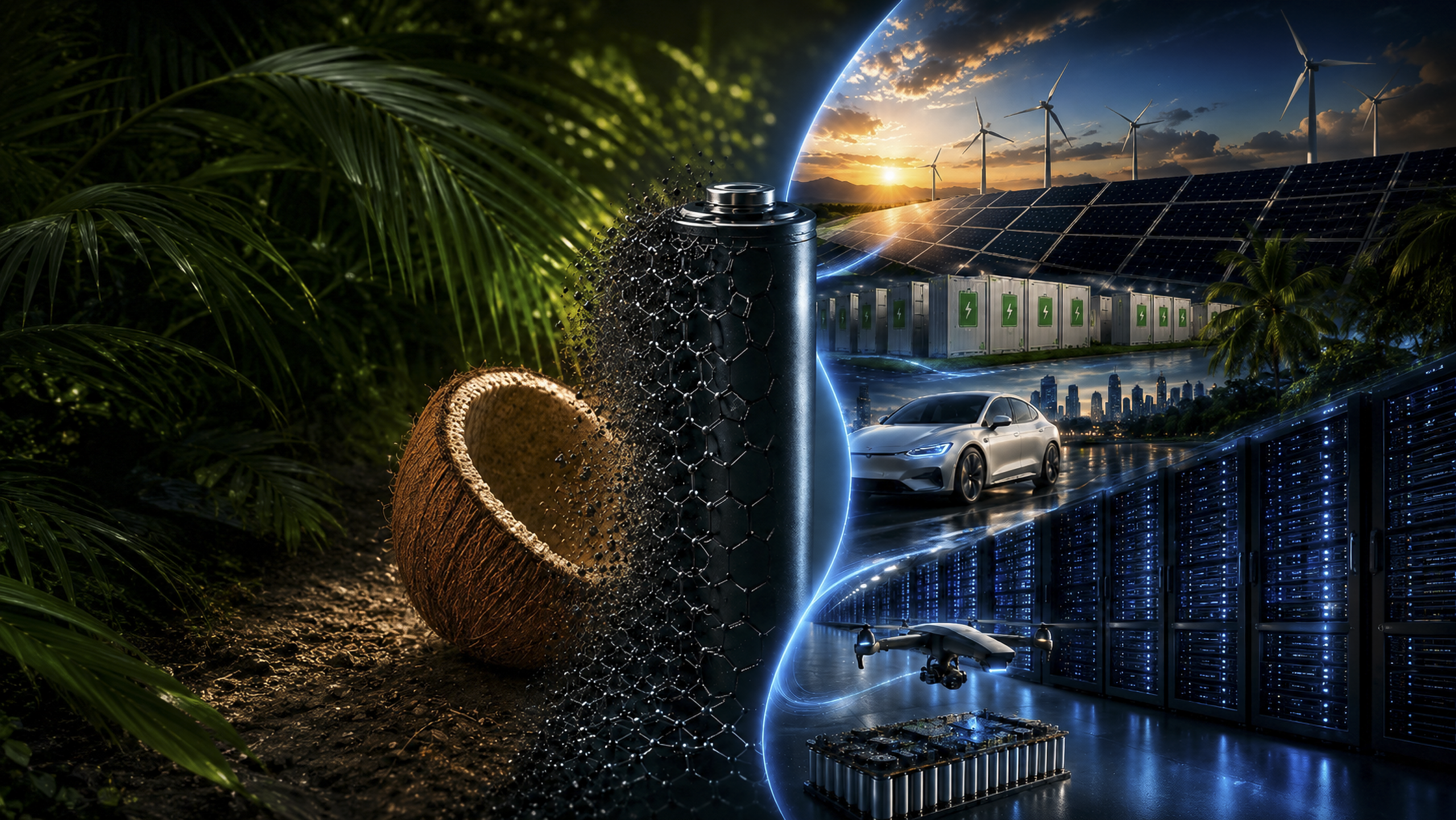
Coconut shell activated carbon embodies a genuinely circular model: an agricultural residue is upcycled into an advanced material; the pyrolysis energy is recovered as electricity; and the resulting carbon enables the batteries and supercapacitors that store renewable power. The material that stores clean energy itself is a product of the bio-based circular economy.
As AI data centers multiply, electric vehicles scale, and grids worldwide demand faster-responding storage, the industry’s choice of carbon feedstock will increasingly influence the carbon intensity of the energy transition. At Haycarb, with more than fifty years of coconut shell carbon expertise, over 15 years of experience in manufacturing batch to batch consistent energy storage carbons, a supply chain strengthened through more responsible charcoaling practices, and a measured product based carbon footprint for HCE 200 and 400 series, Haycarb offers a clear value proposition for the new energy industry. “Shell to Cell” – A Renewable, coconut shell-based energy storage carbon series to power the world.
High performance. Renewable origin. A measured carbon footprint, and a plan to lower it.
Shell to Cell – the carbon making science and art – mastered to craftmanship by Haycarb.