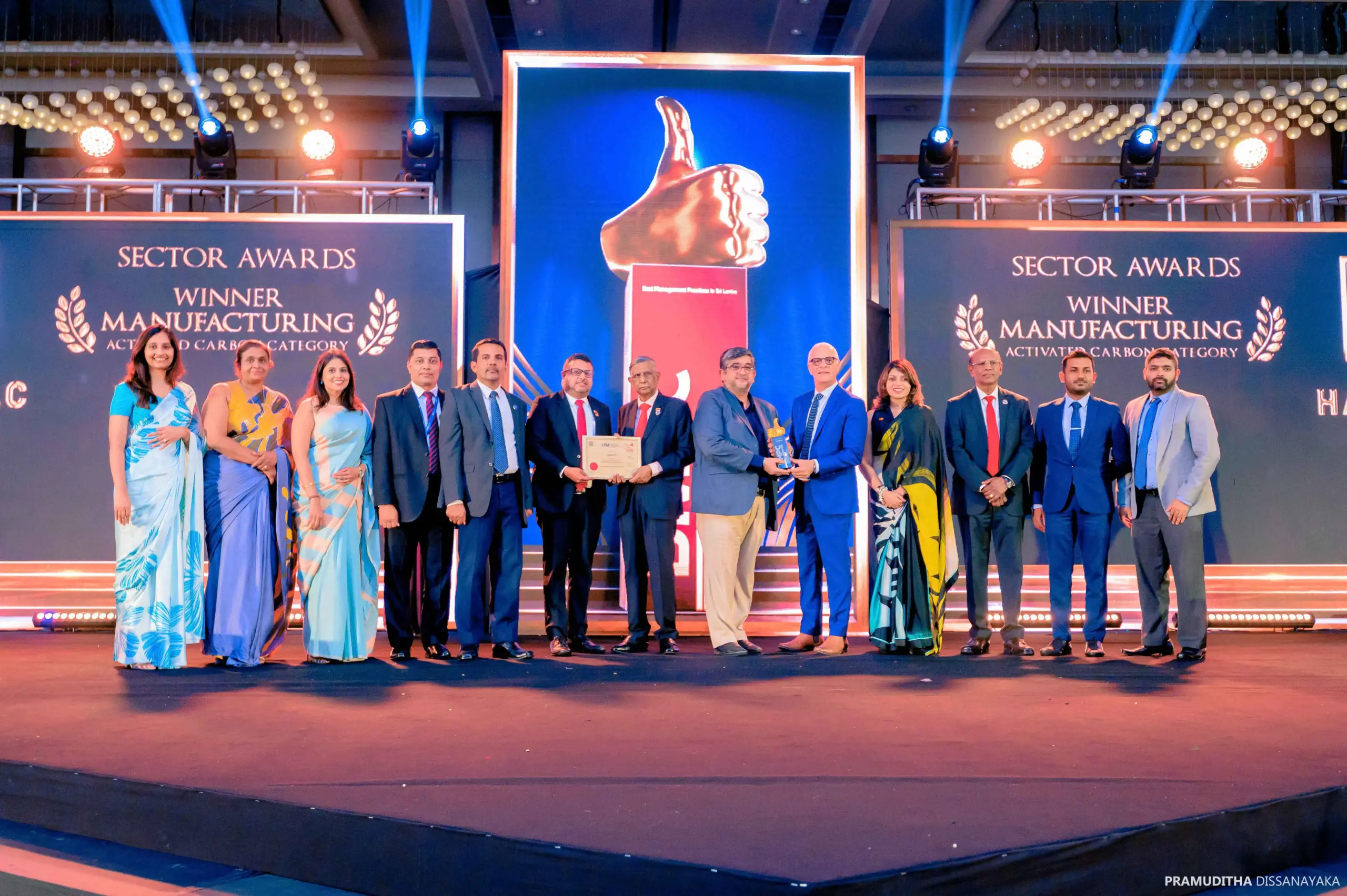

As the global expansion of semiconductor fabrication facilities (fabs) and AI driven data centers accelerate, the invisible chemistry of the air inside them has become mission critical. Haycarb’s specialty and chemically impregnated coconut shell based activated carbons are engineered to protect these highly sensitive environments.
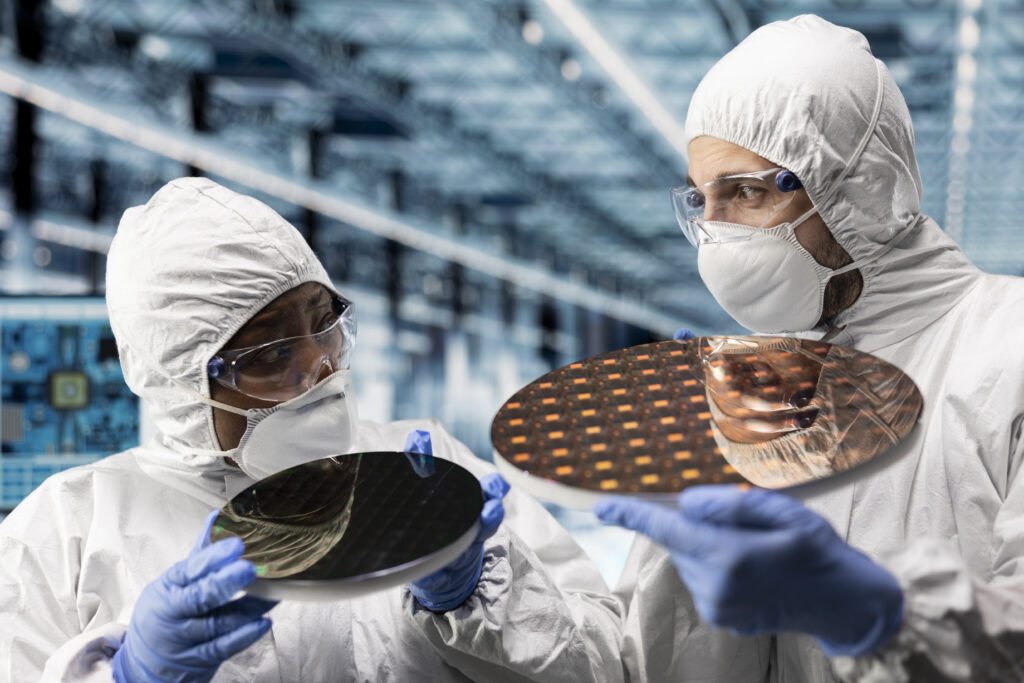
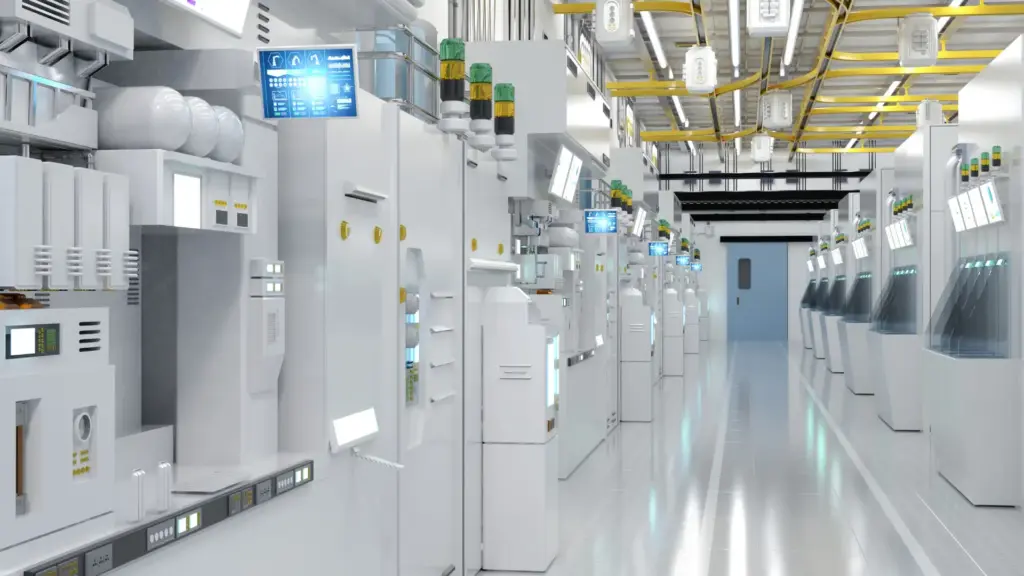
Inside a leading edge semiconductor fab, air is not just an environmental condition, it is a controlled process input. The same is increasingly true for hyperscale data centers supporting the rapid growth of artificial intelligence.
In these environments, contamination measured in parts per trillion, levels far too small to detect can:
- Disrupt photolithography
- Corrode sensitive circuitry
- Reduce equipment lifespan
The world is now building these facilities at an unprecedented pace. As a result, air quality control has evolved from a supporting function to a core design parameter.
At the center of this control lies a highly engineered material: activated carbon.
A Once in a Generation Infrastructure Expansion
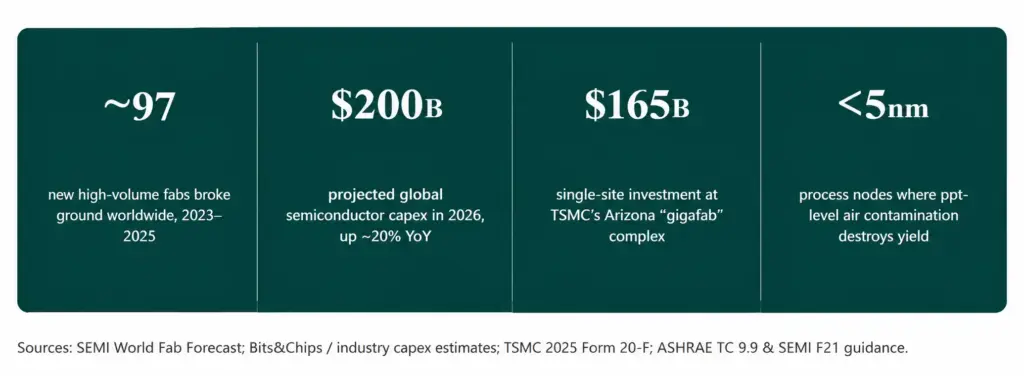
Two major global trends are driving demand for ultra clean air environments:
- The largest semiconductor construction cycle in history
- Rapid expansion of AI-driven data center infrastructure
Both depend on air that is chemically pure.
The Invisible Risk: Airborne Molecular Contamination (AMC)
In cleanrooms, the primary risk is no longer limited to particulate contamination. As device geometries continue to shrink below 5 nm, even trace levels of molecular contaminants can interfere with critical processes and impact yield.
This gas phase threat is known as Airborne Molecular Contamination (AMC), a key consideration in advanced semiconductor fabrication environments.
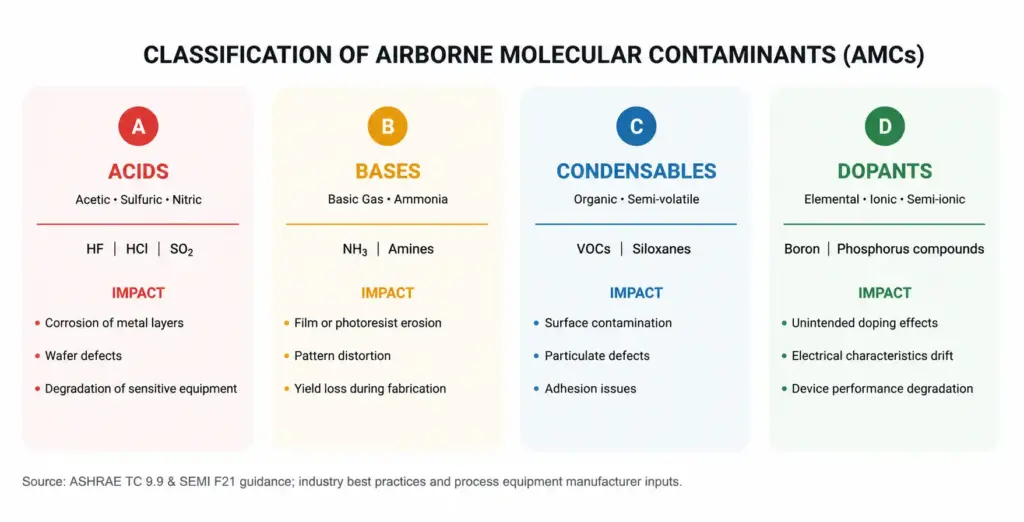
Each of these contaminant groups behaves differently and requires a targeted adsorption or chemisorption approach. As a result, cleanroom air treatment systems are designed with layered gas phase filtration, where the selection of activated carbon plays a critical role in ensuring effective removal across a broad range of molecular contaminants.
Standards such as SEMI F21 define acceptable limits for these contaminants at extremely low concentrations, while ISO 14644 governs particulate cleanliness. Together, they form the basis for designing high performance air purification systems in semiconductor fabrication facilities.
Data Centers: Clean Air as a Reliability Requirement

While less visible than in fabs, the impact of air quality in data centers operating with dense, high value electronics require strict control of corrosive gases to ensure uptime and equipment reliability.
Corrosive gases such as:
- Hydrogen sulfide (H₂S)
- Sulfur dioxide (SO₂)
- Nitrogen oxides
- Chlorine compounds
can cause creep corrosion in circuit boards, leading to short circuits in closely spaced features and unexpected system failures.
Industry standard ANSI/ISA 71.04 defines acceptable environmental conditions, with G1 classification – copper corrosion below 300 Å/month and silver below 200 Å/month represents a controlled, low corrosion environment required by most equipment manufacturers.
To achieve this, facilities rely on gas phase filtration systems using activated carbon and impregnated media, applied across:
- Make-up air
- Recirculated air
- Pressurization systems
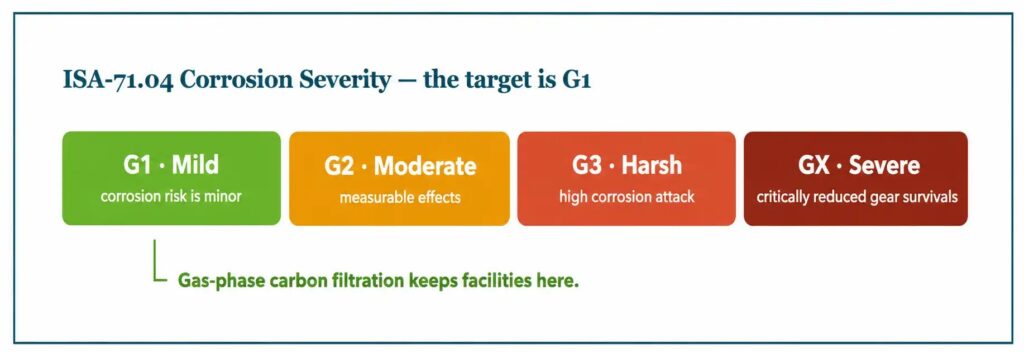
ISA-71.04 Corrosion severity levels – Coconut-shell and impregnated carbons are the workhorse media that hold data centers at the G1 target.
Why Coconut Shell–Based Activated Carbon Performs Better
Not all activated carbons perform equally in these environments.
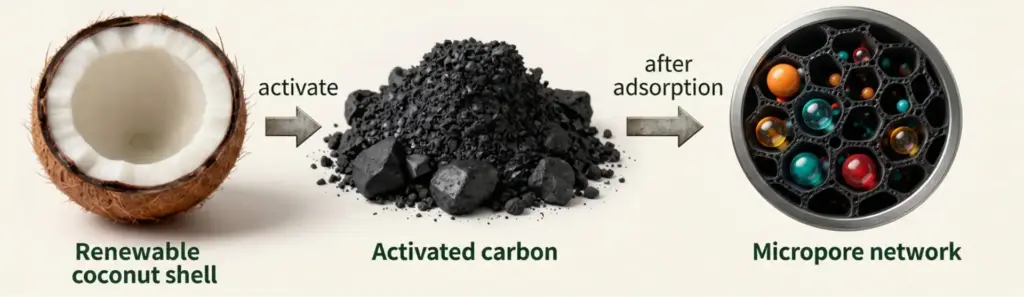
From Coconut shell to micropore, the renewable coconut shell is activated into granules with a dense micropore network that trap trace contaminant molecules.
Coconut shell based activated carbon offers distinct advantages:
- High Microporosity – Its dense micropore structure is highly effective in capturing low-concentration, small-molecule contaminants, which are typical in cleanroom environments.
- Superior Hardness
- Low dust generation
- Minimal attrition
- Reduced risk of secondary contamination
- High Adsorption Efficiency at Trace Levels – Particularly effective under low partial pressure conditions, where many coal-based carbons lose efficiency.
- Longer Service Life
Higher durability translates to:
- Extended filter life
- Reduced replacement frequency
- Improved operational efficiency
Pore Structure: Why Microporosity Matters
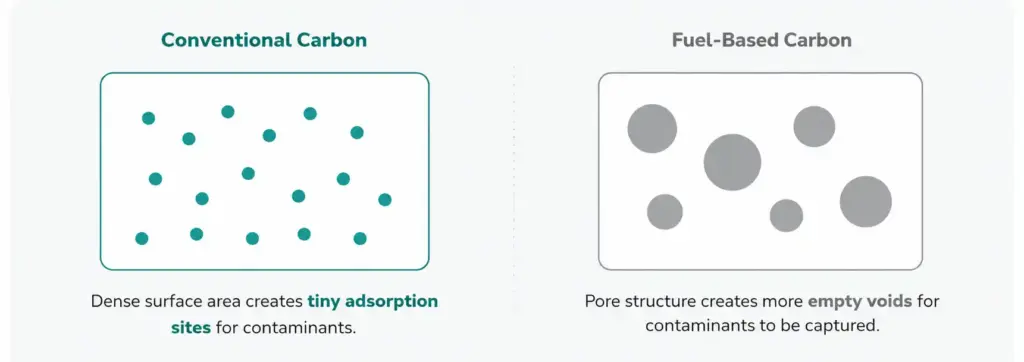
Schematic comparison – Coconut shell carbon’s fine, uniform microporosity gives it a structural edge in adsorbing the small molecules central to cleanroom and data-center air quality.
Beyond Adsorption: The Role of Chemically Impregnated Carbons
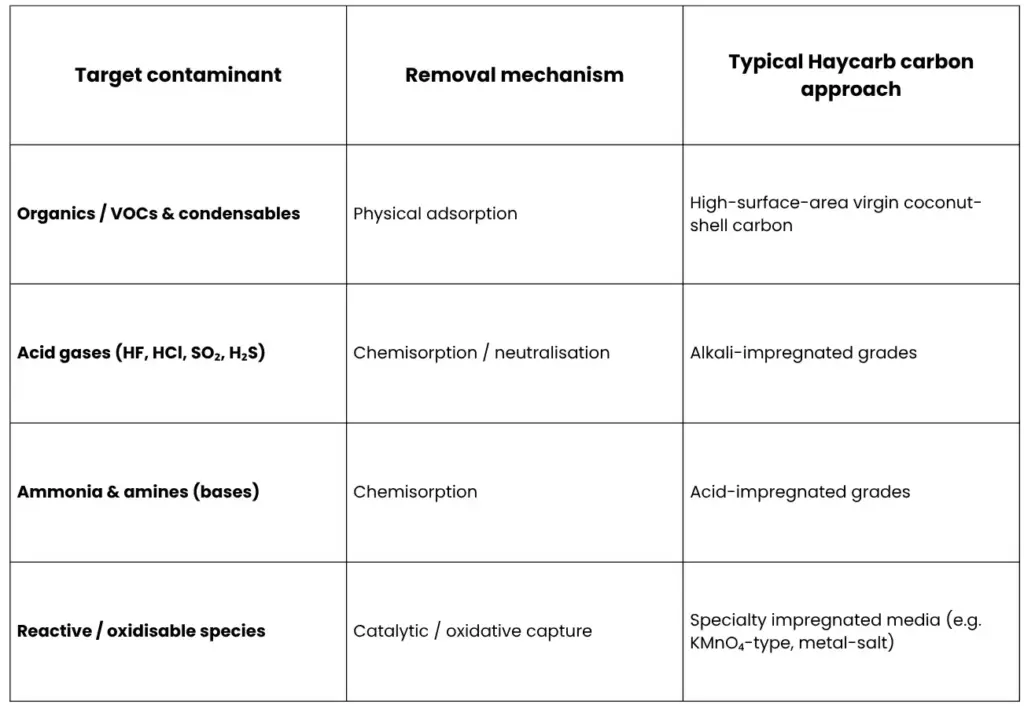
While physical adsorption is effective for organic contaminants, certain gases such as acidic gases, ammonia and other reactive species require chemical interaction for removal.
This is achieved through impregnated activated carbons, engineered with specific reactive agents.
Haycarb tailors the base carbon by impregnating it with active agents matching the target off gas. By selecting the impregnant chemistry, fabs and data centers can neutralise specific molecules with high efficiency and predictable breakthrough behaviour.
Typical applications include:
Activated Carbon, Engineered for Advanced Air filtration
For over five decades, Haycarb has built global expertise in coconut shell based activated carbon, supported by vertically integrated manufacturing, rigorous quality control and dedicated R&D capabilities.
For semiconductor and data center applications, this translates into engineered air filtration activated carbon solutions.
Tailored Application Specific Design
Haycarb designs carbon grades based on measured air quality profiles, ensuring alignment with standards.
This includes optimizing:
- Particle size distribution
- Hardness and durability
- Surface area and pore structure
- Impregnation chemistry
Each parameter is tuned to match the target contaminant profile, enabling precise and efficient removal.
Advanced Impregnation Capabilities
Haycarb offers in house developed chemically impregnated carbonproducts engineered to:
- Neutralize acidic and basic gases
- Capture reactive species through chemisorption
- Complement the adsorption of organic compounds
This ensures broad spectrum contaminant control across diverse air treatment requirements.
Consistency Through Global Manufacturing
Haycarb’s global manufacturing network ensures:
- Uniform activation processes
- Strict quality control (QC) standards
- Consistent product performance across regions
This results in:
- Stable adsorption efficiency
- Optimized pressure drops
- Reliable, repeatable performance at scale
Collaborative Technical Partnerships
Haycarb works closely with:
- Filter OEMs
- Cleanroom system designers
- Facility engineers
from media selection through to performance validation.
This collaborative approach ensures that carbon solutions are fully aligned with system design, operating conditions and long-term performance expectations.
A Renewable Material for a High-Tech Future
Sustainability is an inherent advantage of coconut shell–based activated carbon.
Unlike coal derived alternatives, Haycarb’s carbons are produced from renewable coconut shells, an agricultural by-product, supporting a more responsible material lifecycle.
As semiconductor manufacturers and data center operators increasingly focus on decarbonization and Scope 3 emissions, material selection becomes critical.
Haycarb supports these goals through:
- Renewable sourcing
- Energy-efficient manufacturing
- Carbon reactivation/regeneration services
- Initiatives to reduce environmental impact through product lifecycle impact assessments
These efforts are guided by the ACTIVATE 2030 ESG Roadmap, reinforcing Haycarb’s commitment to responsible and sustainable operations.
From Harvest to High-Tech and back again
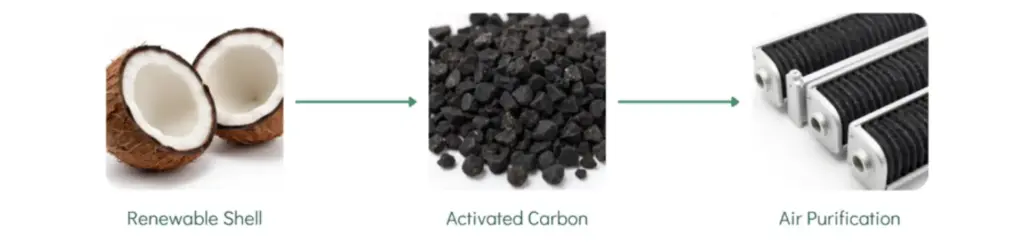
A renewable, circular value chain: coconut shells become high-performance air-purification media and spent carbon can be reactivated rather than landfilled.
Performance and Sustainability Together
The materials protecting advanced semiconductor devices and critical data infrastructure can also support sustainability objectives.
With Haycarb, customers do not need to choose between:
- Performance and Reliability
- Environmental Responsibility
Both can be achieved through carbon engineering solutions.
Build on Cleaner Air
Whether designing a semiconductor fabrication facility or operating a hyperscale data center, maintaining air quality is fundamental to performance and reliability.
Haycarb supports this with specialty and chemically impregnated coconut shell–based activated carbon solutions, tailored to specific air quality challenges.
Connect with Haycarb to explore application specific solutions.