
A story of renewable origins, resilient supply, global reach, and continuous innovation, and of how over five decades of carbon expertise are preparing Haycarb for what comes next.
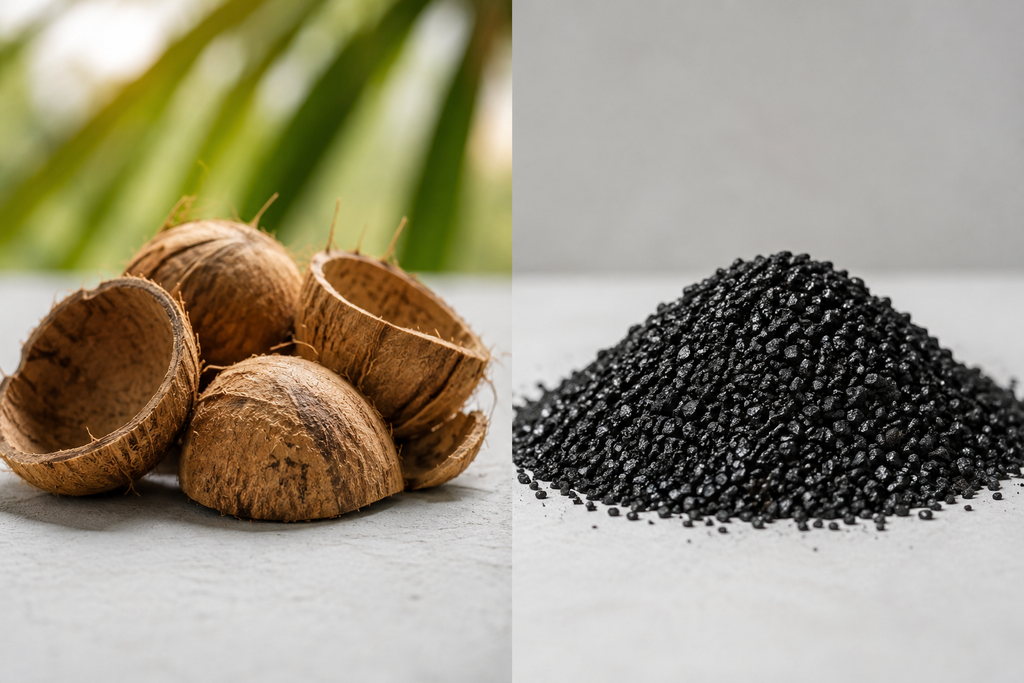
A coconut shell rarely looks like the beginning of a global technology story.
Across the tropical world, it begins as part of an agricultural crop supporting food, livelihoods, and local economies. Once the coconut has served its primary purpose, the shell can easily be seen as what remains: an agricultural by-product of limited value.
More than five decades ago, Haycarb learned to see something different.
We saw a renewable source of carbon. We saw an opportunity to create livelihoods around its collection and transformation. And over time, we learned how to engineer its naturally rich carbon structure for increasingly demanding applications.
Today, that path can lead a coconut shell into a drinking-water filter, a sophisticated clean-air system, a gold mine on another continent, a supercapacitor built for high performance, or even the porous architecture of a next-generation Silicon–Carbon battery material.
Yet the ability to make advanced carbon is only one part of the promise.
For customers operating critical processes around the world, innovation matters only when it can also be delivered consistently, responsibly, reliably and at scale.
That is the story behind Built to Deliver.
Building resilience beyond manufacturing
Activated carbon manufacturing begins long before a kiln is fired.
Coconut shells and coconut-shell charcoal account for more than 70% of Haycarb’ s raw material needs. Building a resilient carbon business has meant understanding manufacturing as well as the agricultural, environmental, and human ecosystem behind the carbon itself.
Over decades, Haycarb has developed a sourcing model spanning multiple countries, supported by different approaches to sustainable charcoal production.
In Sri Lanka, Haritha Angara has helped suppliers move from traditional open-pit charcoaling towards more controlled closed-pit methods that improve combustion efficiency, reduce uncontrolled smoke, and produce more consistent coconut-shell charcoal.
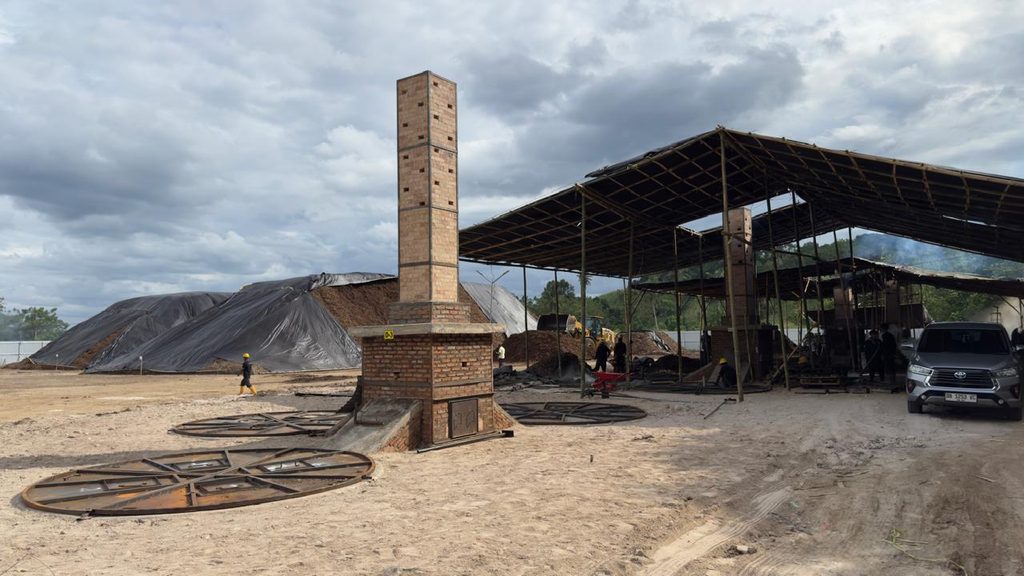
The model has evolved further through Recogen, where heat generated from closed-system charcoaling is recovered to generate renewable electricity. Thailand has developed backward-integrated vertical-kiln charcoaling, while Indonesia has strengthened supply security through new green-charcoaling operations in Surabaya in east Java, and North Sulawesi.
These are not isolated ESG projects. Together, they form a more tightly integrated raw material strategy, designed to improve environmental performance, charcoal consistency, and supply resilience at the same time.
That resilience is strengthened further by geography.
Haycarb’ s sourcing network now spans major coconut-producing regions including Sri Lanka, Indonesia, Thailand, the Philippines, India, and Vietnam. This diversified footprint has historically helped the Group manage volatility in coconut harvests and shell availability across markets.
The philosophy is simple:
Global by Reach. Local by Source.
Four Countries. Seven Plants. One Standard.
For a global customer, resilience has little to do with the size of a single factory.
It comes from the strength of the network behind it.
Haycarb’ s current manufacturing operations span Sri Lanka, Thailand and Indonesia, with annual capacity reaching 58,500 MT in 2025/26. The Philippines investment represents the next step: Haycarb’ s seventh manufacturing plant and its expansion into a fourth manufacturing country.
But the real differentiator is not the number of plants.
It is:
One Standard.
Across locations, consistent performance requires common quality disciplines, analytical capability, process control, technical knowledge, and continuous improvement.
Customers buy confidence: confidence that tomorrow’s material will perform like today’s; that specifications will remain controlled as volumes grow; and that disruption in one geography does not automatically become disruption in their operations.
Haycarb’ s customer satisfaction exceeds 90%, while retention is above 95%. Customers identify product quality, reliability, timely delivery, innovation, and sustainable business practices among their core expectations.
That is what transforms capacity into supply confidence.
From Sri Lanka to a global carbon brand
Haycarb’ s story has also been one of internationalization.
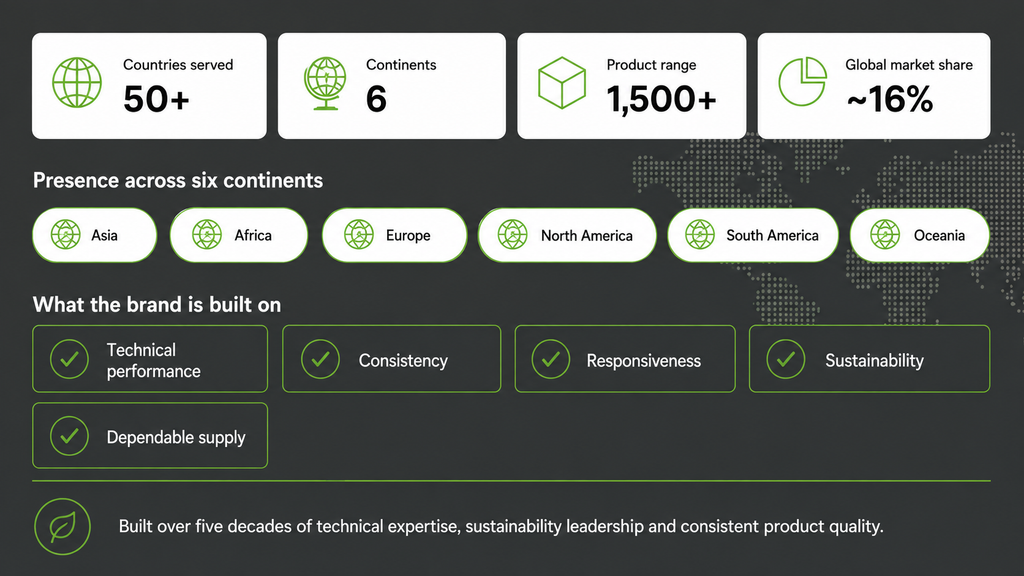
Today, the Group serves customers across more than 50 countries and six continents, offers over 1,500 activated-carbon products and reports an approximately 16% global market share.
This reach has turned Haycarb from an exporter into a recognised global carbon brand.
A global brand, however, is not created simply by selling in many countries. It takes shape when customers repeatedly associate a name with the same qualities: technical performance, consistency, responsiveness, sustainability, and dependable supply.
Built over more than five decades, Haycarb’s global brand is founded on technical expertise, sustainability leadership, and consistent product quality, making it one of the Company’s most valuable strategic assets.
One application, above all others, helped build that international reputation.
金の回収
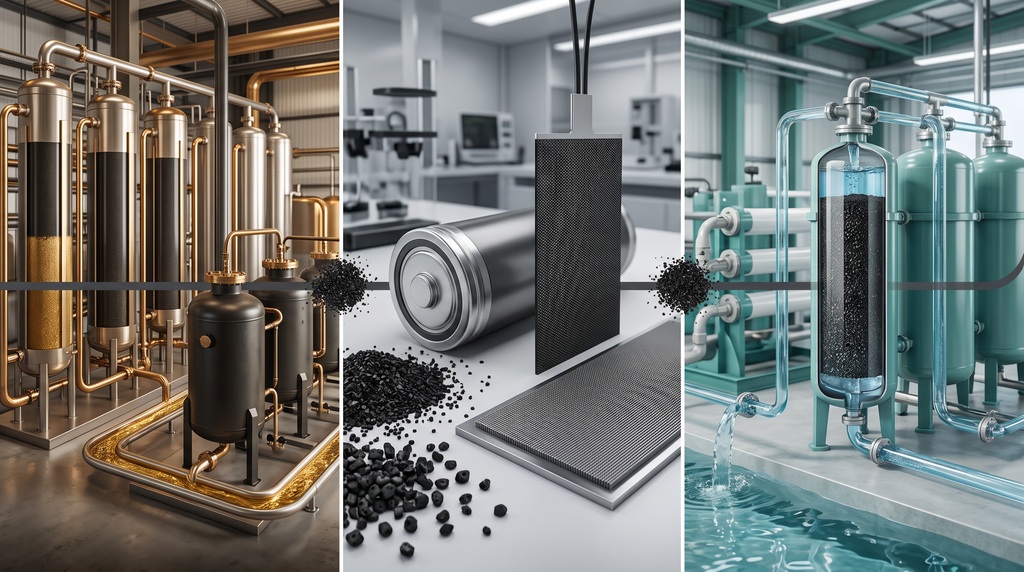
Modern CIP, CIL, CIC, and heap leach operations demand activated carbon with strong adsorption kinetics, high loading capacity, controlled particle size, and exceptional resistance to attrition. In such circuits, poor carbon performance can translate directly into gold losses and reduce plant efficiency.
Over decades, Haycarb built specialist manufacturing know-how, analytical capability, and application expertise around these requirements, establishing a strong international position in gold-recovery carbon.
Gold therefore represents more than a commercially important product platform.
It points to a principle that has shaped Haycarb’ s growth:
For Haycarb, part of the answer has been growing on trees all along.
When performance matters economically, reliability becomes reputation.
Innovation: resilience through reinvention
Resilience, though, is not only about protecting today’s business.
A company that spends all its energy defending the present eventually becomes vulnerable to the future.
One of Haycarb’ s defining strengths has therefore been a continuous spirit of innovation: repeatedly asking what customers will need next, and how knowledge accumulated over decades can be translated into applications of higher value.
During 2025/26, Haycarb launched 14 new products and invested approximately USD 30 million in commercializing its high-end products, while deepening multidisciplinary expertise in electrochemistry, analytical chemistry, battery technology and adsorption science.
The Group’s laboratories now include advanced electrochemical testing and material-characterisation capabilities, designed to detect minute variations in surface area, pore structure, particle size, and purity.
This evolution has moved Haycarb from conventional adsorption into increasingly sophisticated carbon materials.
HCE 200 – when pores become power
Supercapacitors provide one example.
Their ability to charge and discharge rapidly, and deliver high power, depends heavily on the enormous accessible internal surface of porous carbon electrodes.
But high surface area alone is not enough, however. Effective supercapacitor carbon requires carefully controlled pore architecture, purity, surface chemistry, particle characteristics, and electrochemical consistency.
HCE 400 – from shell to scaffold
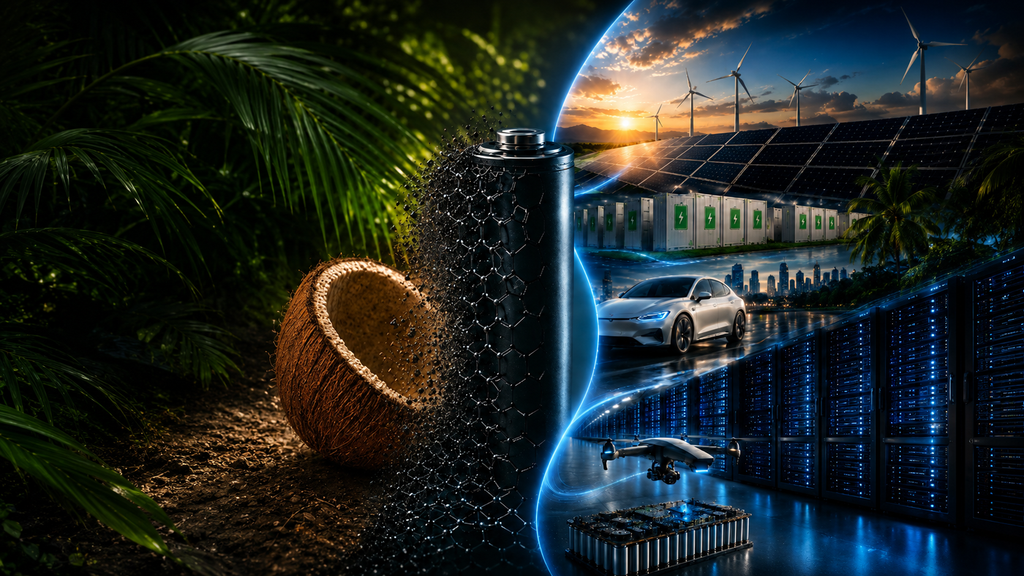
Silicon–Carbon composite anodes take the science another step forward.
Here, porous carbon becomes more than an adsorbent or electrode. It becomes an engineered scaffold within a next-generation battery material.
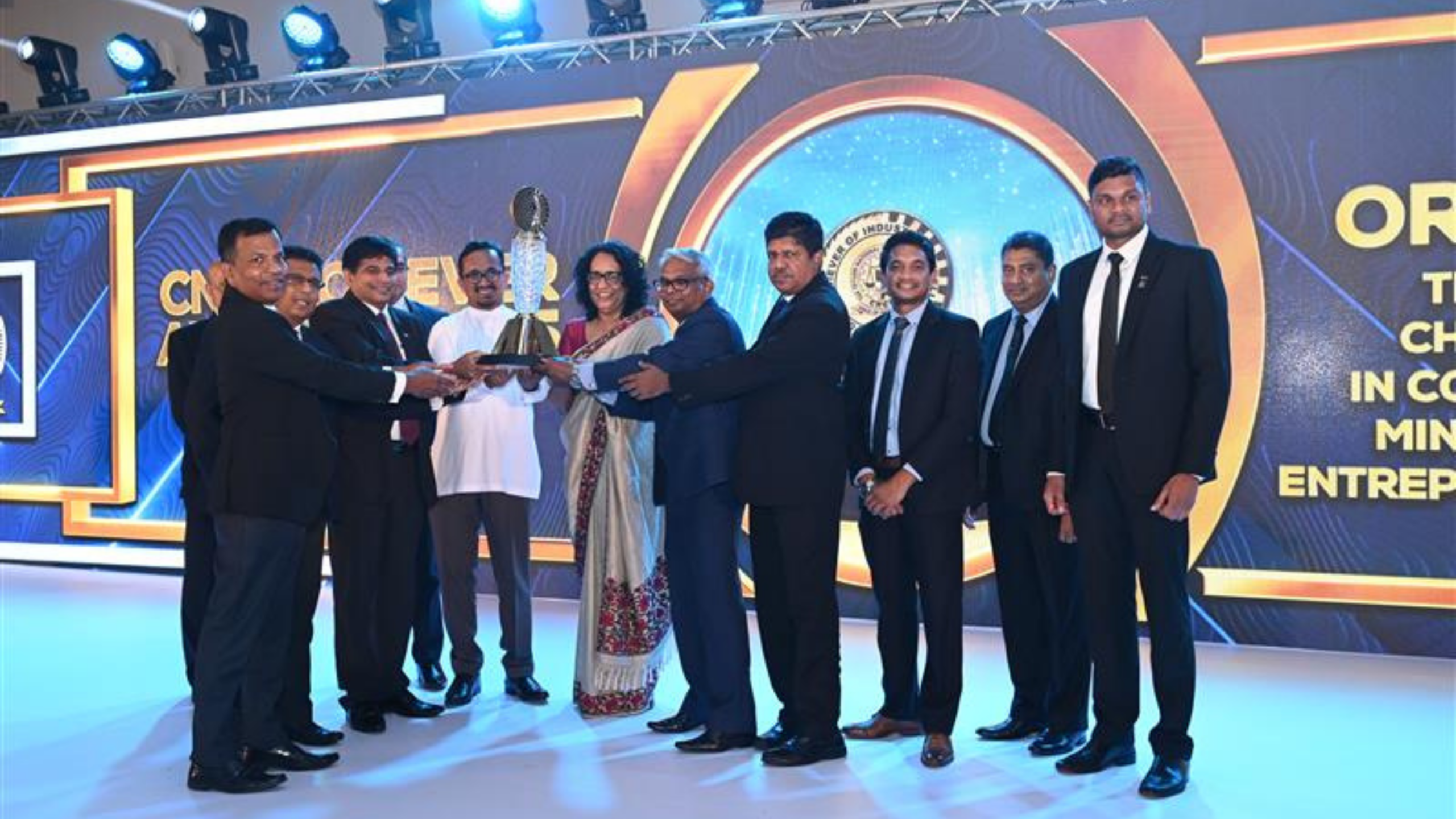
Haycarb’s HCE 400 platform combines high surface area activation, purity control, surface engineering, and precision particle sizing for these demanding applications. The product platform received recognition as the Most Innovative Export Product of the Year 2025 at Sri Lanka’s Presidential Export Awards.
The transformation captures the essence of Sustainable Innovation:
Renewable coconut shell → engineered porous carbon → advanced Si–C anode scaffold
First, the charcoaling and activation stages contribute effectively zero fossil global warming impact under the assessment methodology. Under the IPCC 2021 method, biogenic carbon released during pyrolysis and activation is treated as part of a short atmospheric cycle rather than a net addition. This is a defining advantage of a bio-based precursor. Combined with renewable-powered operations, this means the thermal conversion stages, typically the most energy-intensive in carbon manufacture, register no measurable fossil contribution under the assessment methodology.
The heritage remains carbon.
What changes continuously is what that carbon can be engineered to do.
Engineering carbon around critical needs
Energy storage represents only one frontier.
Water purification remains one of Haycarb’s largest and most established application segments, contributing approximately 34% of the Group’s climate solutions portfolio.
Across residential Point-of-Use and Point-of-Entry filtration, activated carbon has traditionally removed chlorine, taste, odor and organic contaminants. Today, however, customers increasingly need carbon engineered for more difficult contaminants.
Haycarb has developed catalytic carbons with high capacity for chloramine removal, where surface engineering improves reaction kinetics and filtration performance.
Its PFAS removal range addresses another rapidly emerging challenge. Here, the scientific question is no longer simply how much surface area can be produced. It becomes:
Second, the remaining footprint is concentrated in areas where improvements can be explored to further lower the carbon footprint: acid washing chemistry accounts for roughly 43%, LPG used in drying around 15%, and packaging materials a further 13%.
What pore architecture and surface chemistry does this contaminant require?
That is a fundamental shift from conventional activated-carbon production towards carbon engineered for the application.
The same philosophy extends to air purification.
Haycarb’ s portfolio serves industrial emissions, hazardous gases, VOC control, solvent recovery, and personal respiratory protection, while advanced semiconductor manufacturing and AI-driven technology infrastructure are creating new requirements for highly controlled clean-air environments.
As the industries become more sophisticated, the carbon must become more sophisticated with them.
Sustainability that runs through the business
Renewable origin provides an important beginning, but sustainability cannot stop at the coconut shell.
It must continue through charcoaling, manufacturing, energy, water, waste, communities, and the eventual lifecycle of the carbon itself.
Haycarb integrates these priorities through ACTIVATE, its 2030 ESG roadmap, built around Restore, Inspire, Excite, Uplift and Innovate.
Approximately 77% of the Group’s energy requirement was fulfilled through renewable sources in 2025/26, supported by waste heat recovery Recogen and solar generation.
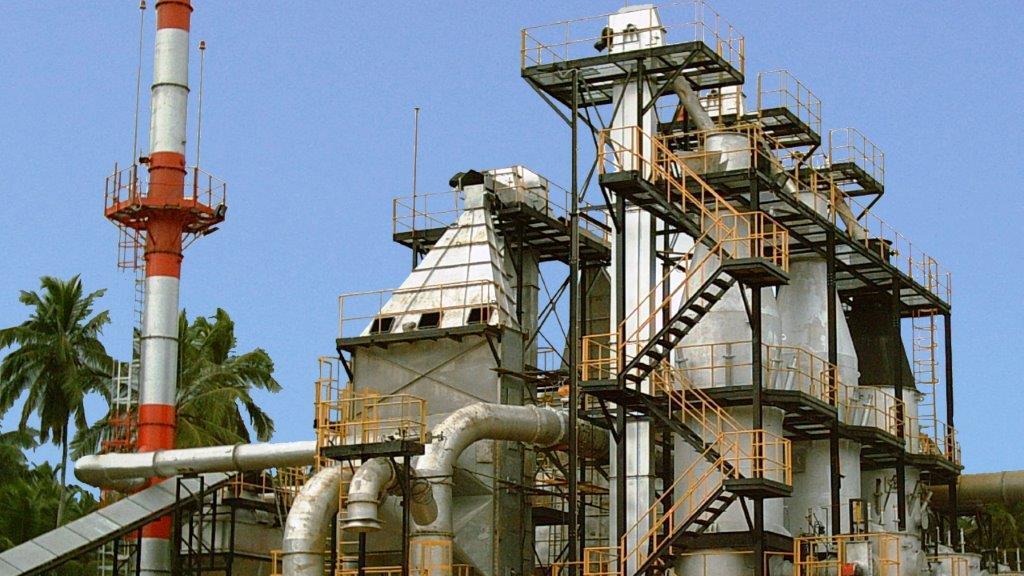
Circularity extends to the product itself. Haycarb’ s regeneration technology can restore used activated carbon to approximately 97% of its original adsorption capacity, replacing a single make, use and dispose cycle with multiple rounds of reuse. The resulting philosophy becomes steadily more circular:
Renewable shell → engineered carbon → critical application → recovery → regeneration → reuse
Haycarb’ s Purpose – Driving Value; Changing Lives – extends this thinking beyond operations.
Programmes such as Puritas Sath Diyawara provide purified drinking water to vulnerable communities at risk of CKD, Behold the Turtle biodiversity conservation project, coconut cultivation initiatives, public health-sector support, and school nutrition connect corporate sustainability with communities and ecosystems.
External recognition across export excellence, innovation, corporate citizenship, green productivity, governance, and sustainability provides another indication that these efforts extend across the organisation. Recent recognition across manufacturing excellence, sustainability, export performance, and corporate reporting reflects Haycarb’s continued commitment to ambitious standards across its business.
Culture for a changing world
The global economic environment confronting manufacturers today bears little resemblance to the world in which Haycarb began in 1973.
Supply chains are interconnected yet vulnerable to geopolitical disruption. Energy and freight markets are volatile. Climate variability affects agricultural raw materials. Technology cycles are accelerating and customers increasingly demand resilience, transparency and environmental responsibility alongside quality and price.
Haycarb cannot predict every disruption.
What it can do is build a culture capable of responding to them.
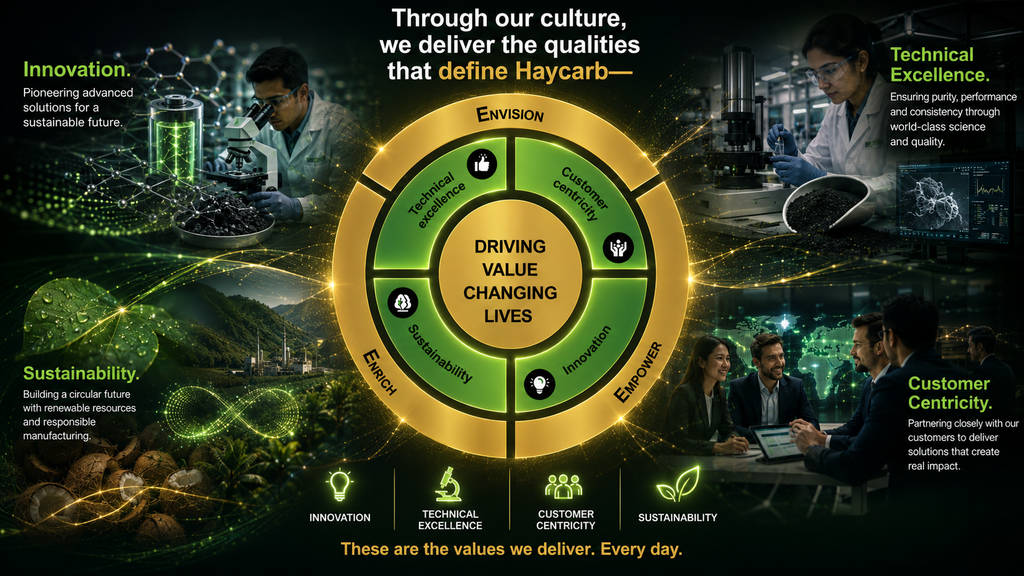
The company’s Purpose is supported by Envision, Empower and Enrich and reinforced through four brand attributes:
Innovation. Customer Centricity. Technical Excellence. Sustainability.
想像する means looking beyond today’s markets.
Empower means equipping people with knowledge, capability, and accountability.
豊かにする means creating value for customers, employees, suppliers, communities, and the environment.
Haycarb’ s skilled and engaged workforce continues to strengthen the Company’s resilience, drive innovation, and support its ability to adapt in a rapidly evolving business environment.
People build resilience.
And behind Haycarb sits another source of institutional strength: the Hayleys Group, which provides governance, financial depth, and investment capability as Haycarb moves into more advanced, capital-intensive technologies.
Built for what comes next
The Built to Deliver story should not end by looking backwards.
The capabilities built up since 1973 now provide a platform for addressing some of the world’s increasingly critical needs.
Energy storage demands better materials for power and energy density.
水 requires solutions for emerging contaminants and rising purification standards.
Clean air is becoming more critical as industrial and technology environments become more sophisticated.
Gold recovery remains an established international strength.
And circular carbon offers the opportunity to keep valuable carbon in productive use for longer.
Different challenges.
Different applications.
Behind them all lies one common capability:
the ability to engineer carbon around a critical need, and to deliver it reliably at scale.
More than Carbon
Somewhere today, another coconut shell is starting down that same path.
It may support a small entrepreneur, pass through a greener charcoaling process, enter one of Haycarb’ s manufacturing facilities and be transformed through technologies refined over decades.
Eventually, it may purify drinking water.
Remove PFAS or chloramine.
Protect the air inside an advanced manufacturing environment.
Recover gold from a mine thousands of kilometers away.
Store electrical charge in a supercapacitor.
Or become part of the porous scaffold enabling a new generation of Silicon–Carbon batteries.
To the customer, what finally arrives may simply look like carbon.
Behind it sits an entire system: renewable raw materials, communities and suppliers, diversified sourcing, global manufacturing, scientific expertise, quality discipline, continuous innovation, people driven by purpose and the institutional strength to keep investing in what comes next.
That is what more than five decades have built.
Not simply manufacturing capacity.
Not merely a portfolio of products.
Not simply a supply chain.
Built to Deliver
Built to Innovate.
Built for What Comes Next.
Renewable at Source. Resilient by Design.
Because reliability is what we deliver.
And when reliability is reinforced by quality, innovation, responsibility, and partnership, consistently, over decades, it creates something far more difficult to manufacture, and far more difficult to replicate.
Trust.