

From rivers, lakes, or reservoirs, water passes through a meticulous municipal water treatment process designed to make it safe, clean, and reliable for daily use. However, have you ever paused to think about what happens between the source and the water you drink?
Even the clearest water from natural sources isn’t free from potential hazards. Suspended particles, dirt, and microorganisms can be hiding in seemingly pure water. This is where municipal water treatment begins its critical work.
Key Steps in the Municipal Purification Process:
Water treatment begins with screening, where large debris is removed to protect downstream systems. Then comes sedimentation, allowing heavier particles to settle and reduce suspended solids. Next is coagulation, where treatment agents bind fine, invisible particles together. This is then followed by flocculation, during which these particles form larger flocs that can be easily removed, producing cleaner water for further purification.
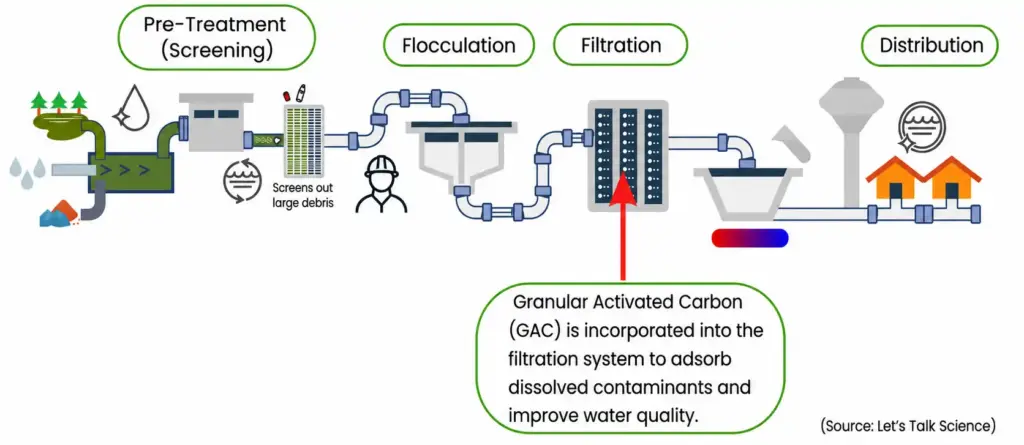
In Middle Eastern countries such as Saudi Arabia, UAE, Qatar, Oman, and Kuwait rely heavily on municipal treatment plants to ensure safe water for millions of residents, often combining advanced purification processes (Activated Carbon Filtration, Membrane Filtration Advanced Oxidation Processes (AOP), Disinfection & Ion Exchange) with desalination to enhance overall water quality.
Advanced Purification Technologies in Municipal Water Treatment
Once water passes through the preliminary stages (Screening, Sedimentation, Coagulation & Flocculation) the advanced treatment phase begins. This is where advanced water purification technologies such as activated carbon filtration systems, membrane filtration, and disinfection come into play.
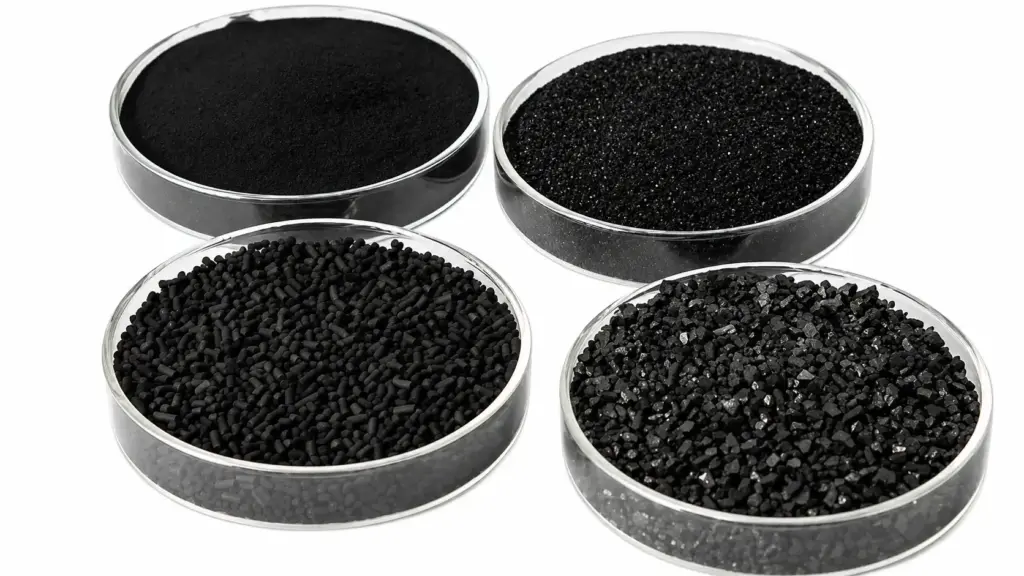
A critical component of the municipal purification process is high-purity 活性炭 which acts at a molecular level, it removes contaminants that could compromise water quality.
At Haycarb, we take pride in providing high-performance activated carbon that forms an essential part of municipal water systems. Our solutions are widely used across GCC countries to enhance water purification processes and support the delivery of clean, high-quality drinking water.
The Importance of Municipal Water Treatment
This process goes far beyond technical infrastructure, playing a vital role in preventing waterborne diseases, protecting communities, and enabling the safe growth of urban areas.
In the Middle East, where water scarcity is a pressing challenge, reliable access to clean water becomes even more critical. For example:
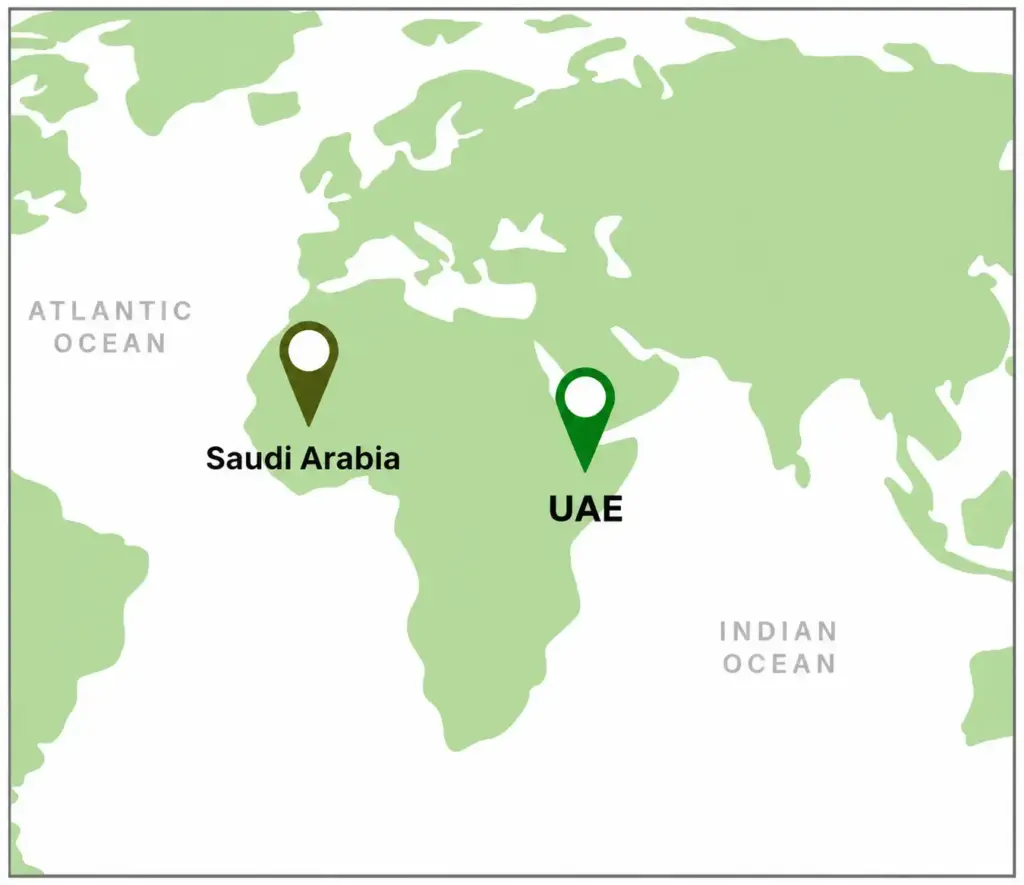
While UAE provides safe drinking water to over 9.5 million residents through an extensive network of treatment plants (Source: International Trade Administration), countries like Saudi Arabia rely on municipal treatment combined with desalination to provide clean water to millions living in arid regions (Source: The Wall Street Journal).
Sustainable Approaches to Municipal Water Treatment
Modern municipal water treatment is also embracing sustainable water purification methods, which is especially important in water-stressed regions. Efforts include reducing chemical usage, recycling treated water and employing eco-friendly water treatment solutions.
Alongside centralized treatment systems, municipalities and building owners implement Point of Entry (POE) systems to treat all incoming water and Point of Use (POU) filters for drinking and sensitive applications. These targeted solutions enhance water quality while minimizing unnecessary chemical use.
This is where the high quality activated carbon plays a key role in drinking water treatment. Its long lifespan and ability to remove contaminants without excessive chemical use makes it an eco-friendly choice, helping municipalities balance water quality with environmental responsibility.
At Haycarb, we continue to innovate, developing high-performance activated carbon solutions that help municipal water treatment systems to achieve both safety and sustainability goals. By removing contaminants and impurities efficiently, our solutions support cities in conserving water, reducing waste, and ensuring reliable access to safe water for millions of people.
FAQs
- What is municipal water treatment?
Municipal water treatment is the process of purifying water from natural sources to make it safe for public consumption. This involves several stages, including screening, coagulation, sedimentation, filtration, and disinfection.
- Why is activated carbon used in water treatment?
Activated carbon is employed in water treatment due to its high surface area and adsorption capacity, effectively removing contaminants such as chlorine, organic compounds, and odors.
- What types of activated carbon are used in water treatment?
The primary types of activated carbon used are Granular Activated Carbon (GAC) and Powdered Activated Carbon (PAC). GAC is commonly used in fixed-bed systems, while PAC is often applied in batch processes.
- What role does water treatment play in sustainable water management?
Modern water treatment practices, including the use of activated carbon, contribute to sustainability by reducing chemical usage, recycling water, and minimizing environmental impact.
- Is municipal water treatment effective in the Middle East?
Yes, municipalities in the Middle East, including cities like Dubai, Riyadh, and Doha, implement advanced water treatment processes to ensure safe and clean water. These systems often integrate multiple purification stages, including membrane filtration, desalination and activated carbon treatment. Activated carbon enhances effectiveness by removing residual organic compounds, chlorine by-products, taste and odor-causing substances and trace contaminants that may remain after primary treatment, ensuring high-quality water before distribution.