
Think about your day for a second – that first cup of coffee, a home-cooked meal, your skincare routine, or even the powerful machines running industries behind the scenes. All of these depend on water. But here’s the catch: not all water is the same – its quality, composition, and safety levels vary depending on the source and use.
Ultrapure Water (UPW) is water so refined that almost every impurity has been removed, down to the tiniest particle. It’s not what you’d sip from a glass, but it’s the lifeline for industries where perfection isn’t optional, it’s mandatory.
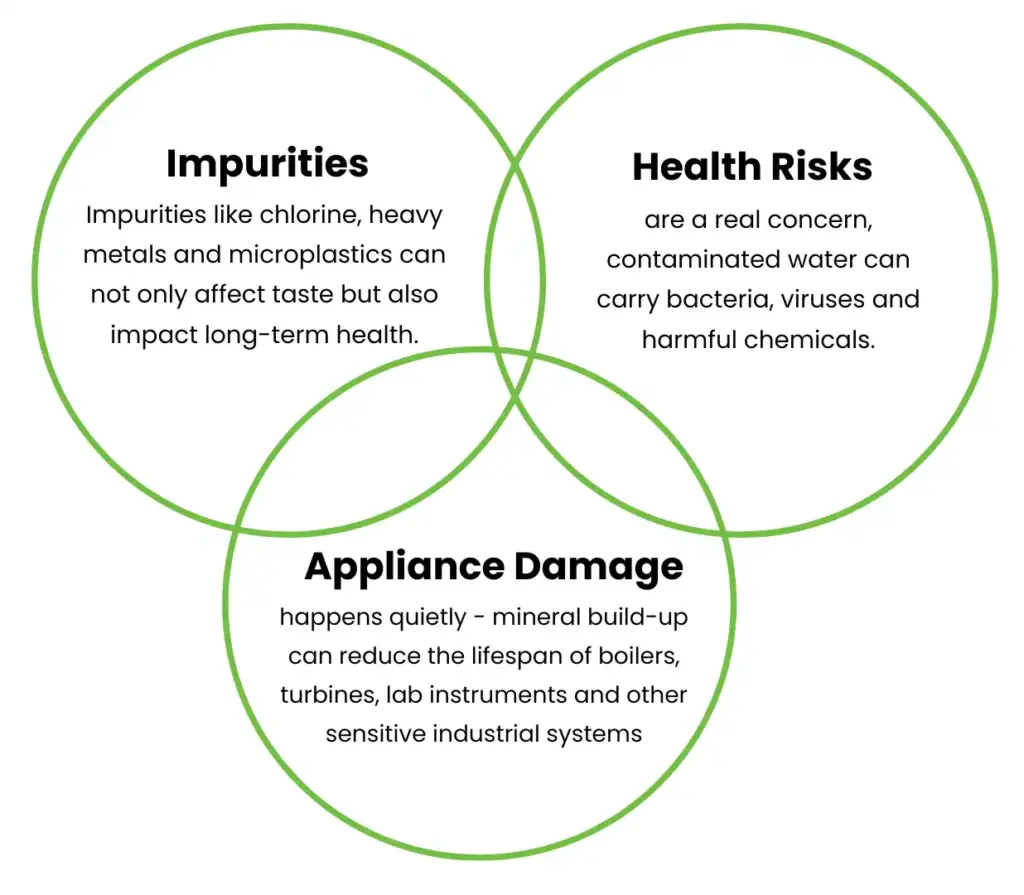
Water quality influences process efficiency, product consistency, and equipment lifespan – it can make or break the result.
At its core, purity defines quality, which is why it needs to be prioritized first. In industrial settings, this extends to ensuring industrial steam system efficiency, corrosion prevention and safeguarding boiler tubes, all of which depend heavily on consistent water purity.
Understanding Ultrapure Water & its Industrial Applications
Ultrapure Water (UPW) undergoes advanced purification processes that remove almost every contaminant, including dissolved salts, organic compounds, bacteria, and even microscopic particles invisible to the naked eye.
Achieving and maintaining this level of purity depends heavily on the quality and performance of the treatment media used within the system, particularly activated carbon.
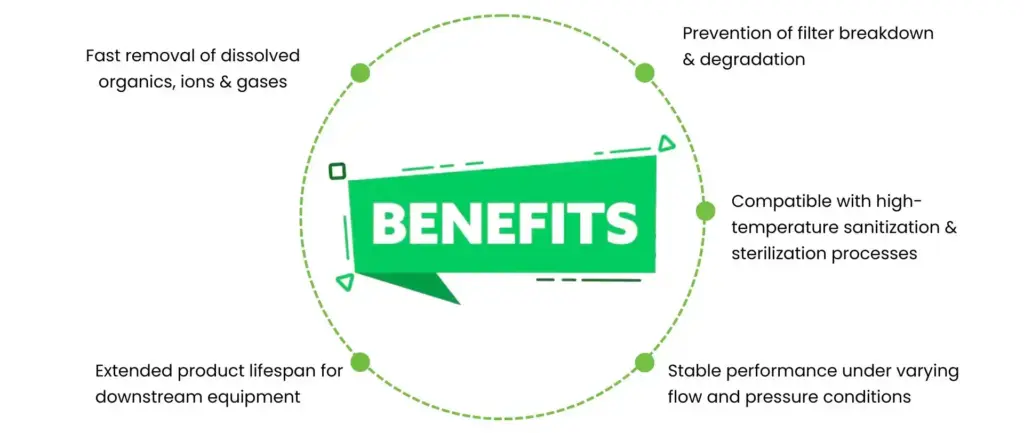
But here’s the twist: it’s not meant for drinking. Without minerals, it’s unsuitable for long-term human consumption. Instead, it powers industries where even the smallest impurity can compromise quality.
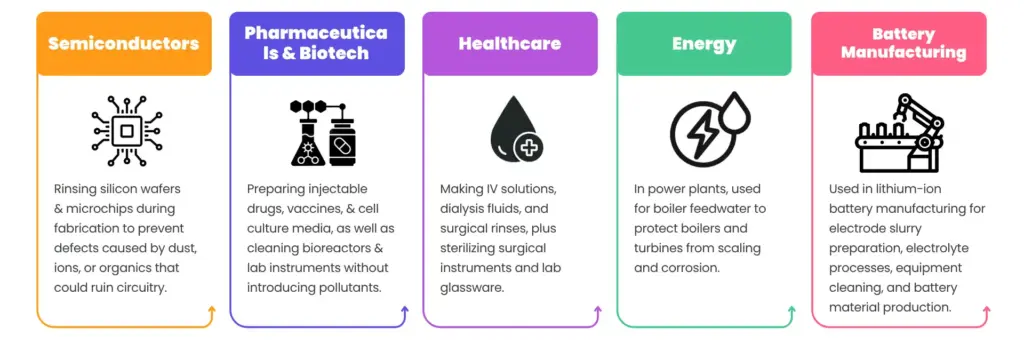
Some of the most common uses of UPW include:
Ultrapure Water vs Other Types of Purified Water
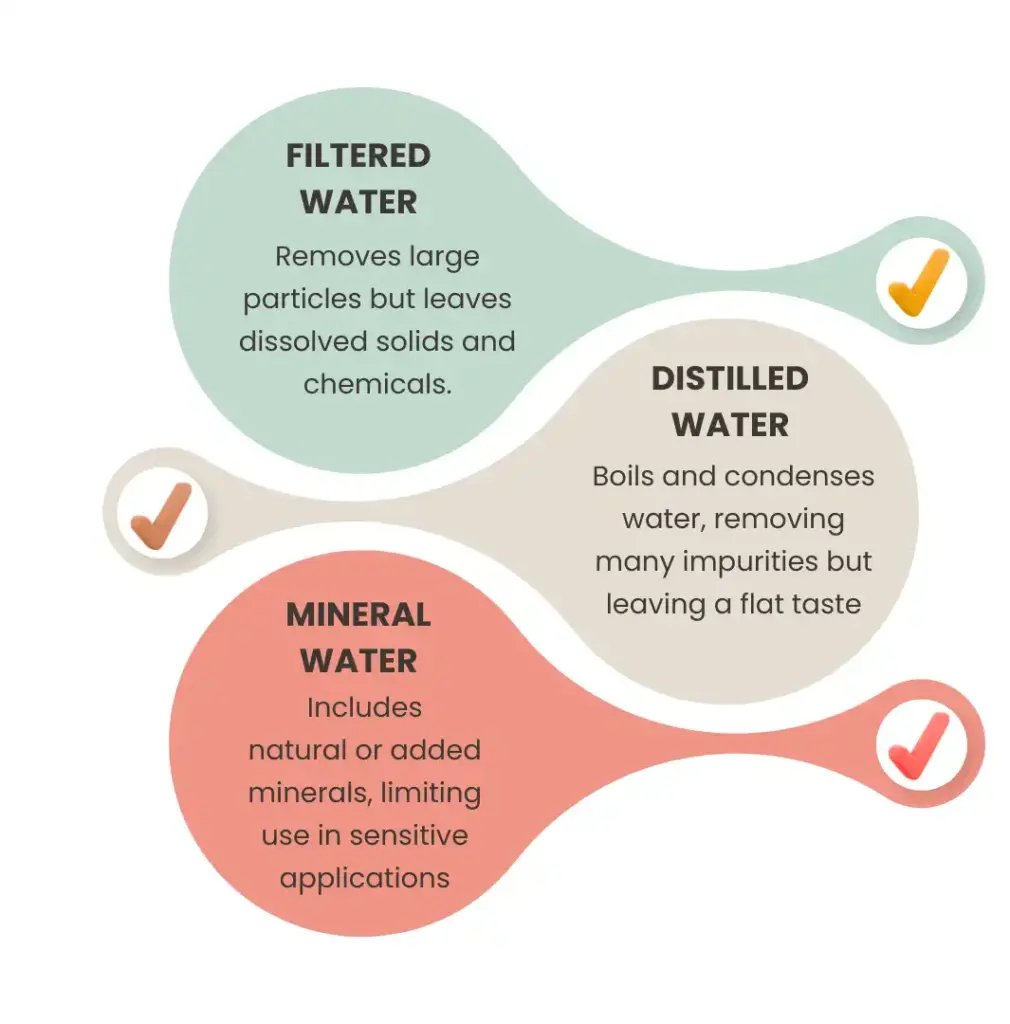
Ultrapure Water is in a league of its own, removing almost everything except the water molecules themselves. The result? Water that is free from any unwanted flavors, odors, or impurities that could interfere with sensitive industrial processes, ensuring absolute purity and unmatched consistency.
It represents a sustainable industrial water purification standard that industries can rely on for both quality and longevity.
The Role of Activated Carbon in Ultrapure Water Purification
On the other hand, we at Haycarb play a critical role in making Ultrapure water treatment possible. Our premium charbon actif products are trusted worldwide to remove chlorine, organic contaminants and unwanted tastes and odors from water, including applications where efficient contaminant removal and water recovery are critical.
Activated carbon works like a microscopic sponge, each grain has thousands of functional micro & meso pores that trap and hold impurities, ensuring only the purest water passes through. By integrating our activated carbon into multi-stage purification systems, we help deliver water that is not only safe but also free from any undesirable flavors or odors, supporting industries and analytical laboratories that rely on the highest quality water.
Choosing the Right Activated Carbon for Ultrapure Water Applications
Selecting the right activated carbon depends on the treatment objective and system design. For ultrapure water applications, granular activated carbon (GAC) is widely preferred due to its stability, ultra-level leachables and suitability for continuous, large-scale filtration systems.
Purification is at the heart of everything we do. At Haycarb, we treat every drop with the weight it deserves. Through our advanced Activated Carbon solutions, we deliver the reliability that global industries and local communities depend on.
To learn more dive into our brochure to see how ultrapure water is driving real-world impact: https://bit.ly/47n7mq8
FAQs
- Is ultrapure water safe to drink? – No. Ultrapure water is not recommended for drinking because it lacks essential minerals required by the human body. In fact, its extreme purity can make it unsuitable for long-term human consumption.
- What makes ultrapure water different from distilled or filtered water? – Filtered water removes larger particles, while distilled water eliminates many impurities through boiling and condensation. Ultrapure water, however, undergoes multiple advanced purification steps to remove nearly all contaminants including salts, organic compounds and microscopic particles leaving only pure H₂O molecules.
- Where is ultrapure water used? – It is widely used in industries where even the smallest impurity can affect results, such as semiconductor manufacturing, pharmaceuticals, biotechnology, power generation, food production and healthcare.
- How is ultrapure water produced? – It is created through multi-stage processes like activated carbon filtration, reverse osmosis, deionization, and UV sterilization. These methods work together to ensure the water meets the strictest purity standards.
- Why does water purity matter so much in industries? – Impurities can damage equipment, affect product quality, and even compromise safety. Ultrapure water ensures consistency, reliability, and compliance with stringent industry requirements.